Hartford trenchless and repair specialists
Sewer Line Repair in Tolland, CT
Fast help for backups, breaks, and root damage.
Local sewer solutions for Tolland homes
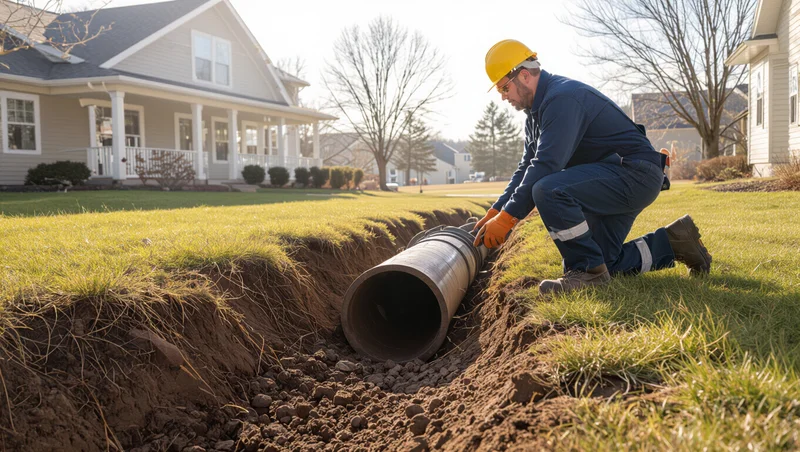
Sewer Line Repair in Tolland, CT matters when drains back up or a pipe fails. Sewer Line Repair Hartford CT connects homeowners in Tolland, CT with local Sewer Line Repair pros. Based in Hartford, CT, we match you with contractors who handle residential sewer line repair, trenchless sewer line replacement, pipe relining, and trenchless pipe repair.
You get practical options that fit your property, from camera inspections to no‑dig repairs that protect lawns and stone walls.
This is a contractor network, not a storefront. Local, licensed crews do the work, and they know Tolland’s roads, weather, and typical soils, so your repair plan is efficient and built to last.
Serving Tolland homes with practical fixes
Backups, slow drains, or soggy patches in the yard often point to a sewer line problem. In Tolland, CT, older clay or cast‑iron laterals, shifting soils, and root intrusion from mature trees near stone walls are common causes. The contractors we match use clear diagnostics and targeted repairs to solve the issue without guesswork.
What local pros repair most often
• Root intrusion that reappears after basic snaking.
• Cracked, offset, or bellied sections that hold wastewater.
• Corrosion or age‑related leaks in clay and cast iron.
• Infiltration and inflow after heavy rain or snowmelt.
• Damage from freeze‑thaw movement and shallow cover near driveways.
Fast access from Hartford to Tolland
Contractors typically mobilize from our office at Hartford, CT in Hartford, CT and reach Tolland by taking I‑84 East. Depending on the address, they exit toward CT‑195 (Merrow Road) or CT‑74 (Tolland Stage Road) to get into neighborhoods near Tolland Green, Crandall Park, and Cross Farms Recreation Complex. Typical travel is about a half hour, with route adjustments for traffic and weather.
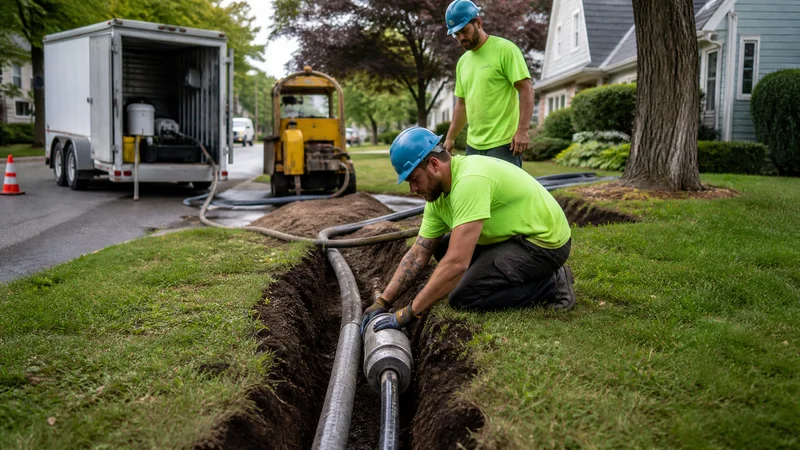
When a job requires larger equipment, two vehicles may arrive: a service van for diagnostics and a truck for jetting or lining gear. For small lots or shared driveways, crews plan staging on the street and keep equipment compact to maintain access for neighbors.
Trenchless options that fit Tolland properties
Many Tolland homes value established lawns, fencing, and historic stonework. Trenchless methods reduce digging and protect those features:
• Pipe relining (CIPP): Creates a new, jointless pipe inside the old one, ideal for root‑prone segments under lawns, patios, or walkways.
• Pipe bursting: Replaces brittle pipe by pulling a new line through, useful when the old line is badly collapsed or undersized.
• Spot liners: Target short defects without relining the entire run.
These methods keep surface restoration to a minimum and often finish faster than open‑cut replacement. Contractors confirm suitability with a camera inspection and depth/utility checks before recommending the approach.
Clear diagnostics before tools touch the yard
Local pros start with a camera inspection and locate the line from foundation to curb or septic connection. You’ll see the condition on video with time stamps and footage length, so decisions are based on facts, not guesses. If buildup narrows the pipe, hydro‑jetting may be done first to clean the line and expose hidden cracks or offsets.
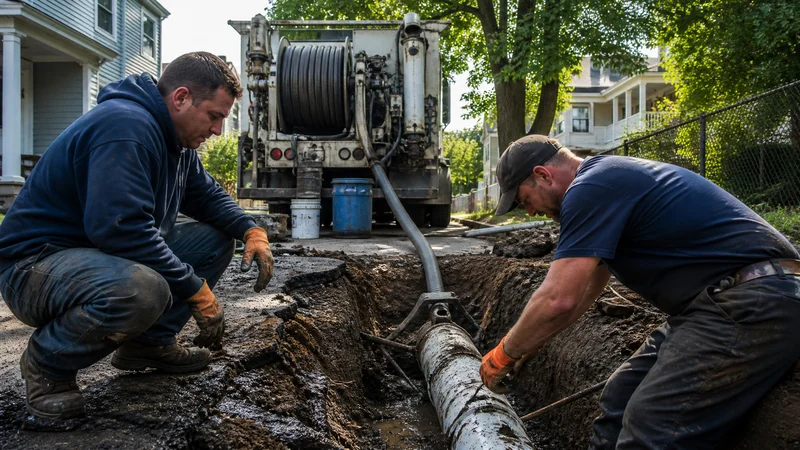
If a section is collapsed or inaccessible, technicians identify the closest safe access point and plan a small, precise dig or cleanout installation to reach the problem. Utility markouts through 811 are requested before any excavation.
Built for New England seasons and soils
Tolland’s glacial till and pockets of ledge can complicate digging. Contractors account for frost depth, groundwater, and drainage patterns, choosing materials and methods that tolerate freeze‑thaw cycles. For shallow sections near driveways or walkways, insulation or rerouting can help reduce future heave or settlement at the repair area.
During spring rains or rapid snowmelt, infiltration can spike. Crews time lining work to avoid excessive groundwater and may use bypass pumping to keep your home’s plumbing usable while repairs are underway.
Neighborhood notes: Tolland Green, Crandall Park, Cross Farms
• Tolland Green Historic District: Many homes sit near mature trees and stone walls. Trenchless relining limits disturbance to roots and historic features, with small access pits placed at property edges when needed.
• Crandall Park area: Mixed lot sizes and recreational traffic mean careful staging. Crews keep access clear and schedule work to reduce impact on weekend parkgoers.
• Cross Farms Recreation Complex vicinity: Athletic fields and long curb runs often mean deeper laterals; pros verify depth, soil type, and nearby utilities before choosing relining or sectional repairs.
How contractors plan the job
- Assessment and video: confirm pipe size, length, and defects.
- Utility markouts: request 811 locates for gas, electric, and communications.
- Proposal with options: open‑cut, spot repair, or trenchless, with timelines and restoration needs.
- Scheduling: coordinate around school pickups, trash days, and local events to keep access easy.
- Completion and verification: final camera pass documents the finished repair for your records.
Permits, codes, and inspections
Tolland projects typically require permits and may involve plumbing inspections. Contractors handle submittals and coordinate with the Town for sign‑offs. If work is near wetlands or within the right‑of‑way, additional reviews can apply; local pros flag these early so your plan stays compliant and on schedule.
Septic or sewer; either way matters
Parts of Tolland are on septic while others tie into municipal sewer depending on the street. Contractors confirm your setup and tailor the approach: septic laterals focus on tight joints and root control, while municipal laterals may need coordination at the main or within the road layout. Either way, the goal is a durable fix that prevents backups.
Materials chosen to last
Modern liners and HDPE replacement pipe resist corrosion and root intrusion. Where open‑cut is best, crews bed the pipe in suitable material and backfill in lifts to reduce settlement. In high‑traffic driveways, they plan compaction and surface restoration that stands up to regular vehicle loads.
Protecting landscapes and hardscapes
Pros use ground protection mats for lawns and pavers, keep spoil piles contained, and clean the site daily. If an access pit is required, it is kept compact and located to preserve shrubs and irrigation. Final raking, seed, or patching is included per the agreed scope so the area is left tidy.
Homeowner prep made simple
Before work starts, clear items near cleanouts and indoor access points. If you have pets, plan a safe space while doors or gates are open. Crews provide a brief checklist so the day runs smoothly, from parking to restroom use for testing your fixtures after the line is restored.
When a full replacement makes sense
If a line is undersized, severely collapsed, or has multiple sharp offsets, full replacement or a combination of bursting and short open‑cut sections may be faster and more reliable. Local pros explain tradeoffs, including lifespan, restoration needs, and how each option will affect your yard, driveway, or walkways.
After the repair
You’ll receive a short summary and, when applicable, a copy of the final camera video. Contractors can discuss root maintenance or household practices to reduce buildup. If municipal coordination was required, they’ll confirm that inspections are complete before closing the job.
Scheduling around traffic and weather
I‑84 can slow during peak commute times or storms. Crews plan arrival windows that avoid the worst congestion and adjust for snow operations when necessary. If a storm is forecast during lining or curing, they may shift the schedule a day to protect results and keep your home usable.
Pricing and value
Project cost depends on pipe size, length, depth, access, and method. Written options outline what’s included so you can compare open‑cut versus trenchless approaches. For a general overview, see sewer line repair costs in Tolland, CT.
Our Services in Tolland, CT
Typical sewer line repair cost in Tolland, CT from independent local contractors (same as elsewhere in the Hartford, CT area): $1,200 - $5,000. See typical sewer line repair costs near Tolland, CT.
Why Tolland, CT Chooses Sewer Line Repair Hartford CT
Quick to Tolland via I‑84
Contractors stage from Hartford, CT and reach Tolland efficiently using I‑84 East and local exits for CT‑195 or CT‑74.
Minimal‑dig trenchless methods
Relining and bursting protect lawns, driveways, and stone walls common near Tolland Green and surrounding neighborhoods.
Diagnostics you can see
Camera inspections and on‑screen locating show the exact problem so repairs are targeted and effective.
Built for rocky soils and winters
Methods and materials are chosen for glacial till, ledge, and freeze‑thaw cycles typical in Tolland, CT.
Permit and utility coordination
Pros handle town permits, schedule inspections, and request 811 markouts before any digging starts.
Respect for your property
Tidy staging, ground protection, and clear daily communication keep your home and routine in good shape.
Sewer Line Repair FAQs in Tolland, CT
What route do Sewer Line Repair crews use to reach Tolland, CT from the office at Hartford, CT in Hartford, CT?
Most trips run I‑84 East, then exit toward CT‑195 (Merrow Road) or CT‑74 (Tolland Stage Road) depending on the address. This puts crews quickly near areas like Tolland Green and Crandall Park. Travel time is typically under an hour, adjusted for weather and traffic.
Are trenchless Sewer Line Repair methods a good fit near the Tolland Green Historic District in Tolland, CT?
Yes. Trenchless relining and spot liners limit digging and help protect stone walls, mature trees, and established landscaping. Contractors place small access pits at property edges and document the line with a camera to confirm suitability before work begins.
How do rocky soils and ledge in Tolland, CT affect Sewer Line Repair plans?
Glacial till and occasional ledge can make open‑cut work slow and disruptive. Local pros often favor relining or bursting to bypass hard digging, and they verify depth and soil with locates before choosing the method.
What permits or inspections are usually needed for Sewer Line Repair in Tolland, CT?
Most projects require a town permit and a plumbing inspection. If work extends toward the right‑of‑way or near wetlands, additional reviews may apply. Contractors prepare submittals, coordinate inspection timing, and provide final video documentation when appropriate.
Can Sewer Line Repair near Crandall Park or along Tolland Stage Road in Tolland, CT avoid major yard disruption?
Often, yes. Trenchless pipe relining or sectional repairs reduce surface work, and staging is planned to keep driveways and sidewalks open. When an access pit is needed, it’s kept compact and restored per the agreed scope.
How do winter freezes and spring rains in Tolland, CT influence Sewer Line Repair scheduling?
Crews plan around deep frost and heavy precipitation to protect curing and trench safety. Bypass pumping keeps plumbing usable, and schedule windows are adjusted when storms or thaw conditions could affect quality or access.
Contact Us Today for a Free Estimate
Stop backups and protect your property with expert sewer line repair.
Schedule your sewer line repair service today.
Free — no obligations